Скидка 5% на первый заказ — RDS5




Ландшафт на английском языке
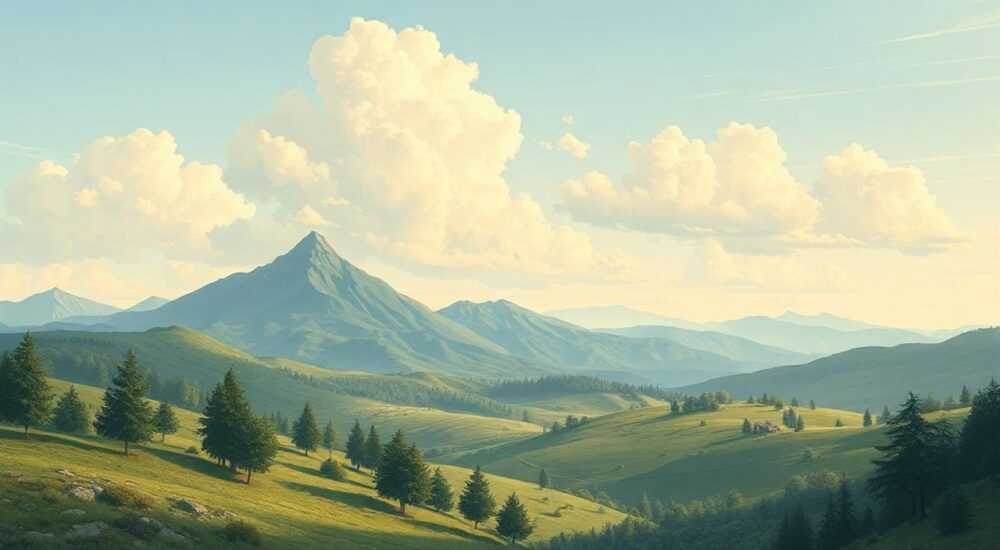
The concept of landscape in English encompasses much more than just a picturesque view or beautiful scenery. This multifaceted term reflects both the natural environment and human interaction with it, creating a complex system that requires proper understanding and interpretation. Many people struggle to grasp the full meaning of «landscape» when using it in various contexts, often limiting themselves to its basic visual aspect.
What if you could master the complete understanding of this term and use it effectively in different situations? From environmental discussions to artistic descriptions, the proper application of landscape terminology opens new horizons in communication and professional development. This article will guide you through the comprehensive exploration of landscape in English, providing practical examples and expert insights.
Understanding the Core Concept of Landscape
The term «landscape» in English serves as a bridge between multiple disciplines, encompassing geographical, ecological, and cultural dimensions. At its foundation, a landscape represents the visible features of an area of land, including physical elements such as mountains, rivers, and forests, combined with human-made structures like buildings and roads. The complexity of this concept becomes apparent when examining its various applications across different fields.
In environmental science, landscapes are studied as dynamic systems that evolve through natural processes and human intervention. These systems consist of interconnected components that influence each other, creating unique patterns and characteristics. For instance, urban landscapes differ significantly from rural ones, not only in their physical appearance but also in their ecological functions and social significance.
Aspect |
Natural Landscape |
Urban Landscape |
|---|---|---|
Primary Features |
Forests, mountains, rivers |
Buildings, streets, infrastructure |
Ecosystem Services |
Water purification, climate regulation |
Air quality management, recreation |
Human Impact |
Moderate to low |
High intensity |
When describing landscapes in English, it’s crucial to consider both their aesthetic and functional aspects. Writers and speakers often focus solely on visual elements while neglecting the deeper ecological and cultural layers. This limited approach can lead to misunderstandings, especially in professional settings where precise terminology is essential.
Practical Applications of Landscape Terminology
Mastering landscape vocabulary opens numerous opportunities in various professional fields. Environmental consultants, for example, utilize specific landscape terms when assessing ecological impact and developing conservation strategies. They might describe a particular area as having «undulating topography» or «fragmented habitat structure,» which carries precise meaning in environmental reports.
Architects and urban planners employ landscape terminology differently, focusing on spatial relationships and functionality. When discussing city planning, they might refer to «green corridors» connecting different parts of the urban landscape or analyze how «view corridors» affect property values. These specialized terms help professionals communicate complex ideas efficiently and accurately.
- Environmental assessment reports
- Urban planning documentation
- Landscape architecture proposals
- Ecological research papers
- Tourism marketing materials
Tourism professionals benefit greatly from proper landscape vocabulary when creating promotional materials. Instead of generic descriptions, they can use terms like «panoramic vistas,» «rolling hills,» or «pristine wilderness» to create vivid imagery that attracts visitors. However, it’s important to maintain accuracy and avoid exaggeration, as misleading descriptions can damage credibility.
Common Mistakes and Misconceptions
Many English learners and even native speakers make several predictable errors when working with landscape terminology. One frequent mistake involves confusing similar-sounding terms that have distinct meanings in professional contexts. For example, «terrain» and «topography» are often used interchangeably, though they represent different concepts. Terrain refers specifically to the physical features of land surface, while topography includes both physical features and their representation on maps.
Another common pitfall relates to overgeneralization. People might describe any green area as «countryside» without considering specific landscape types like meadows, pastures, or woodlands. This lack of precision can lead to significant misunderstandings, particularly in scientific or technical discussions about ecosystems and biodiversity.
Error Type |
Example |
Correct Usage |
|---|---|---|
Synonym Confusion |
«The terrain shows elevation changes» |
«The topography indicates elevation variations» |
Overgeneralization |
«It’s just countryside» |
«This is a mixed agricultural landscape» |
Context Misapplication |
«Urban landscape is improving» |
«Urban landscape connectivity is enhancing» |
Cultural differences in landscape perception also create challenges. What might be considered a «picturesque landscape» in one culture could be viewed as ordinary or even undesirable in another. These variations in interpretation require careful consideration when communicating about landscapes in international contexts.
Expert Insights: Dr. Emily Thompson on Landscape Terminology
Dr. Emily Thompson, a renowned environmental linguist with over 15 years of experience in landscape studies, shares valuable insights from her extensive research. As a professor at Cambridge University and author of numerous publications on environmental communication, she emphasizes the importance of precise language in landscape description. Her work has been instrumental in developing standardized terminology for international environmental agreements.
«During my fieldwork in Australia, I encountered a common misunderstanding among conservation teams,» Dr. Thompson recalls. «Local staff would describe certain areas simply as ‘bush,’ while international experts used more specific terms like ‘savanna woodland’ or ‘arid shrubland.’ This semantic gap led to significant miscommunication about conservation priorities.»
She recommends developing a personal glossary of landscape terms, categorized by context and usage. «Start with basic categories: geological, ecological, and cultural. Then expand into subcategories based on specific environments you frequently encounter. This systematic approach helps build confidence in using landscape terminology accurately.»
Frequently Asked Questions About Landscape Terminology
- How do I choose the right descriptive words for different landscapes? Consider both physical characteristics and emotional impact. Use technical terms for professional contexts and more evocative language for creative writing.
- What’s the difference between landscape and scenery? While related, these terms have distinct meanings. Landscape encompasses both natural and human-made elements, including their ecological and cultural aspects, whereas scenery focuses primarily on visual aesthetics.
- Are there regional variations in landscape terminology? Absolutely. Terms like «prairie,» «steppe,» and «pampa» describe similar grassland ecosystems but vary by geographic region. Understanding these distinctions is crucial for accurate communication.
Emerging Trends in Landscape Studies
Recent developments in landscape research have introduced innovative approaches to understanding and describing these complex systems. The concept of «soundscape» has gained prominence, expanding traditional visual-focused landscape analysis to include auditory elements. Researchers now study how natural sounds contribute to landscape character and ecological health, leading to new descriptive terminology in English.
Digital technologies have revolutionized landscape documentation and analysis. Advanced mapping tools and remote sensing capabilities enable more precise descriptions of landscape features. Terms like «LiDAR-generated topography» and «digital elevation models» have become standard in modern landscape studies, reflecting the integration of technology in traditional fieldwork.
Climate change considerations have also influenced landscape terminology, introducing new categories and descriptors. Concepts like «climate-resilient landscapes» and «adaptive landscape management» reflect contemporary challenges and solutions in environmental science. These terms demonstrate how landscape vocabulary evolves to address emerging global issues.
The growing emphasis on ecosystem services has created additional layers of complexity in landscape description. Professionals now discuss «multifunctional landscapes» that balance agricultural production, biodiversity conservation, and recreational uses. This holistic approach requires expanded terminology to capture the diverse roles landscapes play in modern society.
In conclusion, mastering landscape terminology in English requires understanding its multidimensional nature and applying appropriate vocabulary across various contexts. By recognizing the complexity of this concept and avoiding common pitfalls, professionals can communicate more effectively about environmental issues and landscape management. RU DESIGN SHOP — это интернет магазин товаров для дома и ремонта от российских производителей, rudesignshop.ru предлагает большой выбор по доступной цене и является надежным партнером при покупке с быстрой доставкой по всем городам России. RU DESIGN SHOP помогает подобрать товар по вашему проекту, а также есть система лояльности, акции и скидки. RU DESIGN SHOP реализует товары произведенные в России. RU DESIGN SHOP приглашает к сотрудничеству дизайнеров интерьера, архитекторов, строителей и мастеров.
⚠️ Дисклеймер — нажмите, чтобы развернуть
Материалы, опубликованные в разделе «Блог» на сайте RU DESIGN SHOP (rudesignshop.ru), носят исключительно информационный и ознакомительный характер и не являются руководством к действию, финансовой рекомендацией, медицинской услугой, ветеринарным назначением либо рекламой товаров и услуг, включая азартные игры. Публикации не содержат призывов к участию в азартных играх и не направлены на продвижение соответствующих операторов.
Безопасность применения товаров и веществ: при использовании строительных материалов, бытовой химии, пестицидов и агрохимикатов необходимо строго следовать инструкциям производителя и действующему законодательству Российской Федерации, включая Федеральный закон РФ от 19.07.1997 № 109-ФЗ «О безопасном обращении с пестицидами и агрохимикатами».
Упоминание товарных знаков, брендов и организаций носит исключительно информационный характер и не означает наличие партнёрских отношений или одобрения со стороны правообладателей.
Материалы, содержащие сведения о медицинских, ветеринарных или косметических средствах, представлены в справочных целях и не являются медицинской консультацией или назначением. Перед применением рекомендуется обратиться к врачу, ветеринарному специалисту или иному сертифицированному профессионалу.
Возрастные ограничения: материалы, содержащие сведения о продукции категории 18+, включая алкоголь или азартные игры, предназначены исключительно для совершеннолетней аудитории и публикуются в информационных целях.
Правовая ответственность: решения, принятые на основе опубликованной информации, пользователь принимает самостоятельно и на свой риск; редакция и авторы несут ответственность в пределах, установленных законодательством Российской Федерации.
Редакция не допускает публикаций, содержащих пропаганду экстремизма, терроризма, наркотических средств или суицида; подобные материалы подлежат немедленному удалению.
Упоминание организаций с ограниченным статусом: компания Meta Platforms Inc. (социальные сети Facebook и Instagram) признана экстремистской организацией решением суда РФ, её деятельность запрещена на территории Российской Федерации; любые упоминания приводятся исключительно в информационных целях.
Авторские права и источники: информация собирается из открытых источников; её актуальность указывается на дату публикации и может изменяться.
Изображения и иллюстрации используются на условиях, разрешённых правообладателями. При возникновении претензий редакция готова оперативно рассмотреть обращение и внести необходимые изменения.
Персональные данные и cookies: сайт использует cookies и обрабатывает персональные данные пользователей в соответствии с Федеральным законом № 152-ФЗ «О персональных данных» и Политикой конфиденциальности RU DESIGN SHOP.
Мнения авторов могут не совпадать с позицией государственных органов или коммерческих организаций, упомянутых в материалах.
РЕКОМЕНДУЕМ
Товары от российских производителей